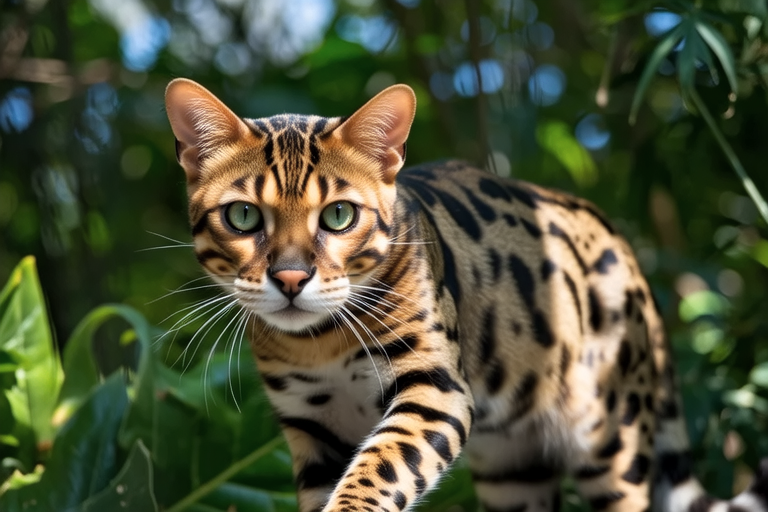
From Jungle to Home: Discovering the Wild Side of Bengal Cats
Bengal cats, with their striking appearance and dynamic personalities, have captured the hearts of many cat lovers. These felines are more than just pets; they are living pieces of art that bridge the gap between domestic life and the untamed wilderness. To truly appreciate the Bengal cat, one must delve into its origins, understand its unique characteristics, and explore the special bond it can form with its human family.
The Origins and History of Bengal Cats
The story of the Bengal cat begins in the mid-20th century when breeders sought to create a domestic cat with the exotic beauty of wild Asian leopards. Jean Mill, an American breeder, pioneered this endeavor by crossing domestic shorthair cats with Asian leopard cats (ALCs), a small wild feline native to South and Southeast Asia. The goal was to produce a cat that retained the striking spotted coat of its wild ancestor while remaining tame and affectionate towards humans.
This breeding program faced numerous challenges. Early generations of Bengals were often unpredictable and difficult to handle due to their strong genetic ties to wild ALCs. However, through careful selection and breeding over several decades, breeders succeeded in producing a stable, domesticated breed that retains the wild look but lacks the wild temperament.
Today, Bengal cats are recognized by various cat registries worldwide, including The International Cat Association (TICA) and the Governing Council of the Cat Fancy (GCCF). They have become increasingly popular among cat enthusiasts who are drawn to their unique appearance and lively nature.
Distinctive Appearance
Bengal cats are easily recognizable by their sleek, muscular bodies and large, expressive eyes. Their most striking feature, however, is their coat, which is marked with bold, irregular spots or rosettes that resemble those of their wild ancestors. These markings come in a variety of colors, including brown, silver, and snow, each adding to the cat’s exotic allure.
One of the most fascinating aspects of a Bengal cat’s appearance is its “glitter” effect. This term refers to the way light reflects off the cat’s fur, giving it a shimmering, almost metallic sheen. This effect is particularly noticeable in cats with lighter-colored coats and is one of the traits that sets Bengals apart from other domestic breeds.
Besides their coat, Bengal cats also have a distinctive face shape characterized by a broad forehead, high cheekbones, and a slightly flattened nose. Their ears are medium-sized and set well apart, giving them an alert and curious expression. All these features combine to create a cat that looks as if it could have stepped straight out of the jungle.
Temperament and Behavior
Beyond their striking appearance, Bengal cats are known for their playful, intelligent, and social nature. They are highly active and require plenty of stimulation to keep them happy and healthy. Owners often describe Bengals as being more dog-like in their behavior, following their humans around the house and even learning to play fetch.
These cats are curious and enjoy exploring their environment, making them excellent companions for people who lead active lifestyles. They are also very intelligent and can be trained to perform tricks or respond to commands, much like dogs. Their intelligence means they can sometimes be mischievous, so it’s important for owners to provide them with plenty of toys and activities to keep their minds engaged.
Bengals are generally friendly and sociable, forming strong bonds with their human families. They tend to be affectionate and enjoy physical contact, often seeking out cuddles or sitting on laps. However, their wild ancestry means that they may not always tolerate strangers or other animals, especially if not properly socialized from a young age.
Caring for and Training Bengal Cats
Given their high energy levels and need for mental stimulation, Bengal cats require a lot of attention and care. Providing them with a stimulating environment is key to keeping them happy and healthy. This includes having plenty of toys, scratching posts, and climbing structures to keep them occupied.
Bengals also benefit from regular interaction and playtime with their owners. Engaging in interactive games such as laser pointer play or retrieving toys can help burn off excess energy and strengthen the bond between owner and cat. Additionally, training sessions can be a fun way to engage with your Bengal and teach them new behaviors.
Diet is another important aspect of caring for a Bengal cat. They require a high-quality diet rich in protein to maintain their muscle mass and energy levels. It’s essential to consult with a veterinarian to determine the best diet for your specific cat based on age, health status, and activity level.
Lastly, regular veterinary check-ups are crucial for maintaining your Bengal’s health. Due to their wild ancestry, Bengals may be more prone to certain health issues compared to other domestic breeds. Regular visits to the vet can help catch any potential problems early and ensure your cat stays in top condition.
The Unique Bond Between Bengal Cats and Their Human Families
Despite their wild ancestry, Bengal cats have the remarkable ability to form deep, meaningful bonds with their human families. These bonds are built on trust, respect, and mutual understanding. Bengals thrive in environments where they feel loved and valued, and in return, they offer their owners unwavering loyalty and companionship.
Owners often report that their Bengals are more than just pets; they are true members of the family. These cats are known for their strong attachment to their human caregivers, often following them from room to room and seeking out close physical contact. They are also highly communicative, using vocalizations, body language, and even facial expressions to convey their needs and emotions.
Building this special bond requires time, patience, and consistent positive reinforcement. By providing your Bengal with love, attention, and respect, you can foster a relationship that will bring joy and companionship to both you and your cat. With proper care and attention, Bengal cats can make wonderful, loving companions for those willing to embrace their wild side.
