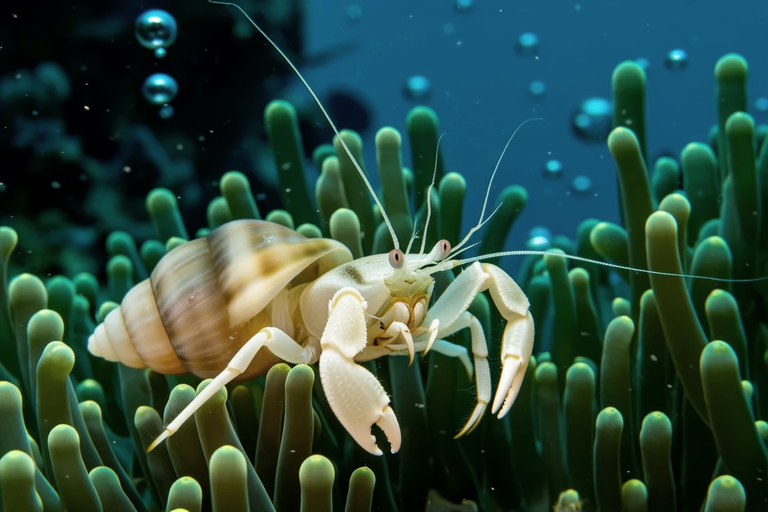
Adorable Yet Unknown: Discovering the Fascinating Life of Pea Crabs
In the vast and intricate world of marine life, there exists a group of creatures that often go unnoticed but are truly remarkable. These are the pea crabs, named for their diminutive size, which barely exceeds a few millimeters. Despite their small stature, pea crabs lead complex lives hidden within the bodies of larger marine animals, making them both fascinating and mysterious. This article delves into the captivating world of pea crabs, exploring their unique habitats, physical characteristics, life cycles, adaptations, and their crucial role in marine ecosystems.
The Tiny Dwellers of the Sea
Pea crabs belong to the family Pinnotheridae and are characterized by their petite size, typically measuring less than half an inch. Their diminutive size allows them to live as symbionts within the bodies of various marine animals, including bivalves such as mussels and oysters, and echinoderms like sea stars. This unique lifestyle has earned them the title of ‘intracellular’ parasites, though it is more accurate to describe their relationship as commensalism, where one organism benefits without significantly affecting the other.
Their habitat within the hosts is not just a matter of convenience; it is a carefully adapted environment that provides protection and nourishment. Inside their hosts, pea crabs find shelter from predators and harsh environmental conditions. They can also feed on the nutrients available within the host’s body, contributing to their survival. This intimate relationship with their hosts is a testament to the complexity of marine ecosystems and the diverse strategies employed by organisms to thrive.
Physical Characteristics and Adaptations
Pea crabs possess several distinctive features that make them well-suited for their unique lifestyle. Their flattened bodies allow them to maneuver easily within the confined spaces of their hosts. Additionally, their legs are modified to grip onto the tissues of their hosts, ensuring they do not get dislodged during the host’s movements. The crab’s exoskeleton is thin and flexible, allowing it to grow and adapt to the changing dimensions of its host over time.
The life cycle of pea crabs is closely tied to their hosts. Females lay eggs inside the host, and once hatched, the larvae swim freely until they find a suitable host to enter. Once inside, the larvae molt several times, eventually reaching adulthood. Throughout this process, they undergo significant changes to adapt to their new environment. For instance, they develop specialized appendages for feeding on the host’s internal fluids and tissues. This adaptation is crucial for their survival, as they rely entirely on their hosts for sustenance.
The Role of Pea Crabs in Marine Ecosystems
Despite their small size, pea crabs play important roles in marine ecosystems. By feeding on the internal fluids and tissues of their hosts, they help regulate the health of the host organism. This interaction can have far-reaching effects on the overall health of the ecosystem. For example, if pea crabs were to disappear from mussel beds, the mussels could suffer from overpopulation, leading to imbalances in the local food web.
Moreover, pea crabs serve as prey for larger marine animals, contributing to the food chain. Their presence within their hosts also aids in nutrient cycling, as their waste products can be absorbed by the host or released into the surrounding water, benefiting other organisms. This intricate web of interactions underscores the importance of studying and conserving these tiny creatures.
Challenges and Myths Surrounding Pea Crabs
Pea crabs face several challenges in their natural habitats. One of the primary threats is the degradation of their hosts’ environments due to pollution and climate change. As human activities continue to impact marine ecosystems, the survival of pea crabs and their hosts becomes increasingly precarious. Conservation efforts must address these issues to ensure the persistence of these delicate relationships.
There are also misconceptions about pea crabs that need to be dispelled. One common myth is that pea crabs are harmful parasites that cause disease in their hosts. However, research has shown that while they do consume some of the host’s resources, the impact is generally minimal and does not lead to severe health issues. Another myth is that pea crabs are rare and difficult to study. While they may be small and elusive, advancements in scientific techniques have made it possible to observe and understand their behaviors and ecological roles.
The Importance of Conservation
The conservation of pea crabs is crucial for maintaining the balance and health of marine ecosystems. Understanding their biology and ecology can provide valuable insights into broader ecological processes. For instance, studying pea crabs can help researchers better comprehend the dynamics of symbiotic relationships and the resilience of marine species in the face of environmental changes.
Efforts to conserve pea crabs and their hosts should focus on protecting their habitats and addressing the root causes of environmental degradation. This includes reducing pollution, mitigating the impacts of climate change, and promoting sustainable fishing practices. By doing so, we can ensure the continued existence of these adorable yet unknown creatures and the vibrant ecosystems they inhabit.
Understanding pea crabs also contributes to our broader knowledge of marine biology. Their unique adaptations and life cycles offer valuable lessons about the complexities of life in the ocean. Moreover, studying these tiny creatures can inspire new approaches to solving ecological problems and developing innovative technologies. In essence, the study of pea crabs is not just about preserving a specific species but about fostering a deeper appreciation for the interconnectedness of all life in the sea.
Conclusion
Pea crabs, with their adorable appearance and fascinating lifestyle, are a testament to the wonders of marine biodiversity. Hidden within the bodies of their hosts, these tiny creatures lead complex and vital lives that contribute significantly to the health and balance of marine ecosystems. By learning more about pea crabs and their roles, we gain valuable insights into the intricate workings of the ocean and the importance of conservation efforts. As we continue to explore and understand these creatures, we can better appreciate the beauty and complexity of the marine world and work towards safeguarding it for future generations.
