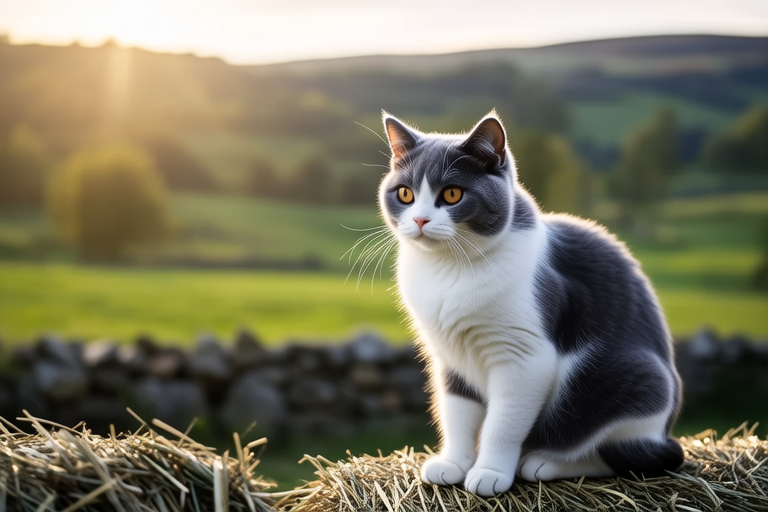
From Farm to Feline Favorite: The Heartwarming Journey of Scottish Folds
In the verdant landscapes of Scotland, nestled among rolling hills and misty moors, lies a tale as enchanting as it is heartwarming—the story of the Scottish Fold. These charming felines, with their distinctive folded ears, have journeyed from humble beginnings on farms to becoming cherished companions in households around the world. This article delves into the origins of these captivating creatures, explores the science behind their unique features, and charts their transformation from farm cats to beloved pets.
The Origins on Farms
The Scottish Fold’s story begins in the 1960s on a farm near Coupar Angus in Perthshire, Scotland. A barn cat named Susie, known for her lush white coat and perky ears, gave birth to a litter of kittens, one of which, named Snooks, possessed a unique trait: its ears folded forward, giving it a look that was both whimsical and adorable. This singular characteristic was the beginning of what would become a breed recognized for its distinctive appearance.
The farm where Susie lived was a bustling place, teeming with life and activity. Farmers valued her and her offspring for their hunting prowess, as they were adept at keeping rodents at bay. Little did they know that Snooks’ folded ears would spark interest far beyond the borders of their farm. The trait was not just a quirk; it was the result of a genetic mutation that would define the breed.
The Genetic Aspect Behind Their Distinctive Traits
The folded ears of the Scottish Fold are caused by a dominant gene called autosomal dominant gene (Fd). This gene affects the cartilage in the ear, causing it to fold downward. While this mutation is responsible for the breed’s signature look, it also brings challenges. Not all cats with the Fd gene develop folded ears, and some may only exhibit a slight bend. Moreover, breeding two Scottish Folds together can lead to health issues, particularly in the joints, due to the accumulation of the gene.
Scientists have found that the gene responsible for the folded ears is linked to a condition called osteochondrodysplasia, which can cause thickening of the bones and joints. This discovery underscores the importance of careful breeding practices to ensure the health and well-being of the cats. Despite these challenges, dedicated breeders work tirelessly to maintain the breed’s health while preserving its unique characteristics.
The Transition from Farm Cats to Beloved Pets
The transition of Scottish Folds from farm cats to cherished pets was marked by several key milestones. In the early days, farmers noticed that these cats were not only efficient hunters but also gentle and affectionate, traits that made them popular companions. Their docile nature and endearing looks caught the attention of cat fanciers, leading to efforts to establish the breed formally.
One such milestone was the recognition of the Scottish Fold by the Governing Council of the Cat Fancy (GCCF) in the United Kingdom in 1973. This formal acknowledgment paved the way for the breed to gain international recognition. However, the path was not without challenges. Concerns over health issues and the potential for inherited disorders led to a temporary suspension of the breed’s registration in the UK. This decision highlighted the need for responsible breeding practices and underscored the importance of prioritizing the health of the cats.
Despite these hurdles, the Scottish Fold’s popularity continued to grow. In the United States, the breed was accepted for championship status by the Cat Fanciers’ Association (CFA) in 1979. This acceptance marked a significant step in the breed’s journey, opening doors for more people to experience the joy of owning a Scottish Fold.
Anecdotes and Stories
Among the many stories of Scottish Folds, one stands out: the tale of Bella, a Scottish Fold who became a therapy cat. Bella, with her soft, plush coat and expressive eyes, was adopted by a family who noticed her calming presence. They soon realized that Bella had a special gift—she could soothe and comfort people. Bella visited hospitals and nursing homes, bringing smiles and warmth to those in need. Her story is a testament to the breed’s ability to connect with humans on a deep level.
Another story is that of Whiskers, a Scottish Fold who became a local celebrity. Whiskers was known for her playful antics and her uncanny ability to fetch toys. She often entertained visitors at a pet store, where she would playfully bat at balls and toy mice. Whiskers’ antics brought joy to countless people, showcasing the breed’s playful and interactive nature.
Why Scottish Folds Have Become a Favorite Among Cat Enthusiasts
Scottish Folds have become a favorite among cat enthusiasts for several reasons. Their temperament is one of their most endearing qualities. They are known for being affectionate, calm, and adaptable, making them ideal companions for families and individuals alike. Their easygoing nature means they can adjust to various living situations, whether it’s a bustling household or a quiet apartment.
Moreover, their distinctive appearance sets them apart. The folded ears give them a unique and charming look, reminiscent of owls or teddy bears. This appearance, combined with their gentle demeanor, makes them irresistible to many. Their plush coats and round faces add to their appeal, creating a visual charm that captivates both cat lovers and casual observers.
The adaptability of Scottish Folds extends beyond their personalities. They are relatively low-maintenance when it comes to grooming, requiring only regular brushing to keep their coats healthy and shiny. Their intelligence and curiosity make them enjoyable to interact with, as they are always ready for a game or a cuddle.
In conclusion, the journey of the Scottish Fold from farm cats to beloved pets is a testament to the enduring bond between humans and animals. Their distinctive folded ears, though a product of genetic mutation, have captured the hearts of many. The challenges faced along the way have shaped the breed into what it is today—a cherished companion known for its affection, adaptability, and unique charm. Whether you’re a seasoned cat enthusiast or simply curious about these delightful creatures, the Scottish Fold offers a story of love, resilience, and companionship that resonates deeply.
