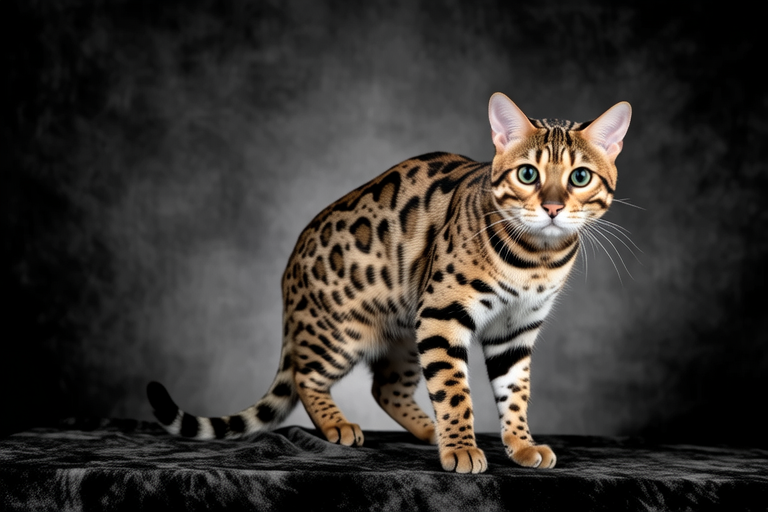
Bengal Cats: The Wild at Home
With their striking spotted coats and lively personalities, Bengal cats have captured the hearts of cat enthusiasts worldwide. These magnificent creatures are a testament to the beauty of nature’s design and the wonders of selective breeding. In this article, we will explore the fascinating world of Bengal cats, from their wild ancestry and genetic traits responsible for their stunning appearance to their vocal behaviors and care requirements.
The Wild Ancestry and Domestication History
Bengal cats trace their roots back to the Asian leopard cat (Prionailurus bengalensis), a small wild feline native to the forests of South and Southeast Asia. The idea of breeding domestic cats with their wild cousins was first conceived by Jean Mill, a breeder from California. Her goal was to create a domestic cat that retained the wild look of its ancestors without their fierce temperament.
In the early 1960s, Mill began crossing domestic shorthair cats with Asian leopard cats. This initial attempt resulted in offspring that were difficult to handle due to their wild nature. However, through selective breeding and patience, Mill eventually succeeded in producing a breed that combined the best of both worlds – the exotic appearance of the wild cat and the gentle disposition of the domesticated one.
The Bengal cat was officially recognized by The International Cat Association (TICA) in 1983 and has since grown in popularity among cat lovers. Today, Bengal cats are known for their friendly and playful demeanor, making them excellent companions for families and individuals alike.
Distinctive Spotted Coats: A Genetic Marvel
One of the most striking features of Bengal cats is their beautiful spotted coats, which can range from classic rosettes to marbled patterns. These markings are the result of specific genetic traits inherited from their wild ancestors. The gene responsible for the spots is called the taqpep gene, which controls the distribution of melanin, the pigment responsible for coloration in animals.
The taqpep gene is located on chromosome 7 and plays a crucial role in determining the pattern of the coat. When this gene is activated, it triggers the formation of distinct spots or rosettes, giving Bengal cats their signature appearance. Additionally, the presence of other genes, such as the Agouti gene, further influences the coat’s color and pattern.
Another interesting aspect of Bengal cats’ coats is their glitter effect, which makes the fur appear to shimmer under light. This trait is caused by a recessive gene and adds to the overall allure of the breed. The combination of these genetic factors results in a coat that is not only visually stunning but also unique to each individual Bengal cat.
Vocal Behaviors: Communicating with Their Owners
Bengal cats are known for their vocal nature, often communicating with their owners through chirping, trilling, and even “talking” in a way that sounds almost human-like. While all cats are capable of making various sounds, Bengal cats tend to be more talkative than many other breeds.
This vocal behavior is thought to be linked to their wild ancestry, as it may have helped them communicate with their mothers and siblings during their early development. In captivity, this tendency has been amplified, resulting in Bengal cats that are eager to engage with their human companions.
Owners of Bengal cats often report that their pets seem to have a wide range of vocalizations, from soft purrs to loud meows and everything in between. Some Bengal cats even enjoy “conversations” with their owners, responding to words and sounds in a way that can feel almost like a dialogue. This level of interaction makes Bengal cats particularly appealing to those who enjoy having a companion that feels more like a friend than just a pet.
Care Requirements for Energetic Cats
Bengal cats are highly active and intelligent animals, requiring plenty of stimulation and exercise to thrive. Owners should provide their Bengals with toys that encourage play and exploration, such as puzzle feeders, interactive toys, and climbing structures. Regular play sessions are essential for maintaining their physical and mental well-being.
Despite their wild heritage, Bengal cats are generally adaptable and can live comfortably in a variety of environments, including apartments and homes with limited space. However, they do require regular access to safe outdoor areas or indoor spaces that allow them to climb, jump, and explore. Providing a stimulating environment will help prevent boredom and destructive behavior.
When it comes to grooming, Bengal cats typically have short, dense coats that require minimal maintenance. Weekly brushing is usually sufficient to remove loose hair and distribute natural oils throughout the coat. Bathing is rarely necessary unless the cat gets into something particularly messy. Owners should also pay attention to their Bengals’ nails, trimming them regularly to prevent overgrowth and potential injury.
Health Considerations and Popular Myths
While Bengal cats are generally healthy and robust, there are certain health conditions to which they may be predisposed. One of the most common issues is hip dysplasia, a condition affecting the hip joint that can cause pain and mobility problems. Responsible breeding practices and careful selection of breeding pairs can help reduce the incidence of this condition.
Another potential concern is progressive retinal atrophy (PRA), a degenerative eye disease that can lead to blindness. Early detection and management can help slow the progression of PRA and improve the quality of life for affected cats. Regular veterinary check-ups and genetic testing are important for identifying and addressing any potential health issues.
One popular myth about Bengal cats is their ability to roar like lions. While it is true that they belong to the same family as lions, tigers, and leopards, Bengal cats do not possess the specialized larynx structure required for roaring. Instead, they produce a range of vocalizations, from purring to chirping and meowing, which are characteristic of domestic cats.
Another misconception is that Bengal cats are more aggressive than other breeds. In reality, their wild appearance and vocal nature can sometimes be misinterpreted as aggression. With proper socialization and training, Bengal cats can be gentle and affectionate companions, much like any other domestic cat.
Conclusion
Bengal cats are truly remarkable animals, combining the beauty of their wild ancestors with the charm and adaptability of domesticated pets. Their distinctive spotted coats and vocal behaviors make them stand out among other cat breeds, while their energetic and intelligent natures ensure they remain engaging companions for their owners.
By understanding the history, genetics, and care requirements of Bengal cats, owners can provide their pets with the best possible life. Whether you’re a seasoned cat lover or considering adopting your first Bengal, these unique felines offer a rewarding and enriching experience for anyone lucky enough to share their home.
