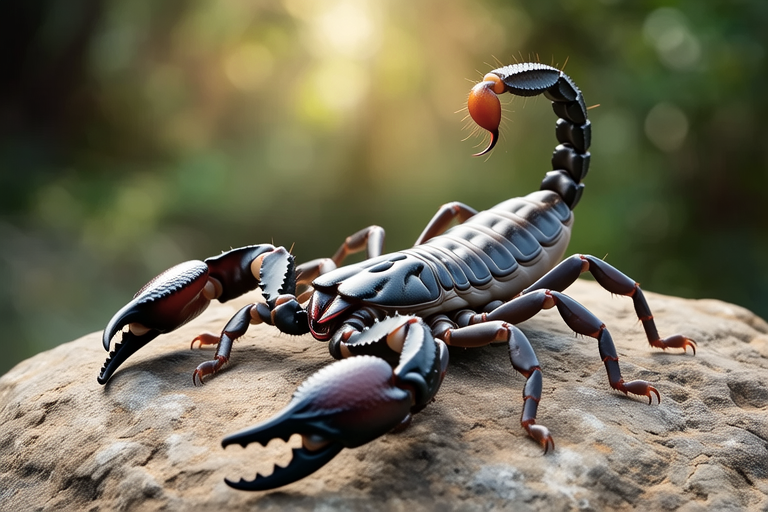
The Fascinating World of Heterometrus Spinifer: A Lesser-Known Arachnid
In the vast tapestry of Earth’s biodiversity, some creatures remain hidden from the spotlight, their stories untold. One such creature is Heterometrus spinifer, a lesser-known arachnid that deserves our attention. This article delves into the world of Heterometrus spinifer, exploring its physical characteristics, habitat, diet, behavior, and unique adaptations. We will also discuss its role in its ecosystem and the threats it faces, highlighting why studying this species is crucial for biodiversity conservation.
Physical Characteristics
Heterometrus spinifer belongs to the family Scorpionidae, a group of arachnids known for their formidable stingers. These scorpions exhibit a distinctive appearance characterized by a robust body structure and a set of pincers or pedipalps at the front of their bodies. The pincers are used for grasping prey, defense, and sometimes communication. Their bodies are segmented into three main parts: the cephalothorax (fused head and thorax), the mesosoma (abdomen), and the metasoma (tail).
One of the most striking features of Heterometrus spinifer is its exoskeleton, which is covered in fine hairs. These hairs play a vital role in sensory perception, helping the scorpion detect vibrations and changes in air currents. Additionally, these hairs can sense chemical signals, aiding in navigation and prey detection. The exoskeleton also provides protection against predators and harsh environmental conditions.
Another notable feature of Heterometrus spinifer is its venomous sting located at the tip of the tail. This sting serves as both a defensive mechanism and a hunting tool. The venom contains a complex cocktail of neurotoxins that immobilize prey, making it easier for the scorpion to subdue and consume. However, despite the potential danger, the venom’s effects on humans are generally mild, causing localized pain and swelling.
Habitat and Distribution
Heterometrus spinifer is primarily found in Southeast Asia, particularly in countries like India, Thailand, Malaysia, and Indonesia. These scorpions prefer humid environments and are often found in dense forests, caves, and rocky areas near water sources. They are nocturnal animals, emerging at night to hunt and avoid the heat of the day.
The specific habitats of Heterometrus spinifer include tropical rainforests, mangrove swamps, and coastal regions. In these environments, they find shelter among rocks, logs, and leaf litter. The humidity and temperature in these areas are ideal for their survival, providing the necessary conditions for their exoskeletons to remain flexible and preventing dehydration.
Diet and Feeding Behavior
Heterometrus spinifer is a carnivorous predator, feeding mainly on insects, spiders, and other small invertebrates. Its diet consists of a wide range of prey, including crickets, beetles, ants, and even smaller scorpions. The scorpion uses its pincers to grasp and crush its prey, injecting venom through its stinger to paralyze it. Once the prey is immobilized, the scorpion feeds by tearing it apart with its chelicerae, a pair of mouthparts used for biting and chewing.
The hunting behavior of Heterometrus spinifer is both efficient and stealthy. It relies heavily on its sensory capabilities to locate and capture prey. The scorpion’s ability to detect vibrations and chemical signals allows it to pinpoint the location of potential food sources with remarkable precision. Additionally, its nocturnal lifestyle helps it avoid competition with diurnal predators and increases its chances of successful hunts.
Behavior and Social Structure
Unlike many other animals, Heterometrus spinifer does not exhibit complex social structures. It is primarily solitary, with individuals living independently within their territories. Males and females come together only during mating season, after which they part ways. Despite this solitary nature, Heterometrus spinifer has developed several interesting behaviors that contribute to its survival.
One such behavior is the scorpion’s ability to glow under ultraviolet light, a phenomenon known as fluorescence. This glow is believed to serve multiple purposes, including communication, attracting mates, and possibly deterring predators. Another fascinating behavior is the scorpion’s use of a silk-like substance to create shelters or burrows. This silk is produced by specialized glands in the abdomen and is used to construct protective cocoons for molting or creating safe spaces for laying eggs.
Unique Adaptations
Heterometrus spinifer has evolved several unique adaptations that have enabled it to thrive in its environment. One of the most significant adaptations is its ability to withstand extreme environmental conditions. These scorpions are highly resilient and can survive in areas with limited resources, making them well-suited to their natural habitats.
Another adaptation is the scorpion’s ability to conserve energy. As nocturnal hunters, they rely on ambush tactics to catch prey, reducing the need for constant movement. This behavior minimizes energy expenditure, allowing the scorpion to focus its efforts on hunting when conditions are optimal. Additionally, the scorpion’s exoskeleton provides excellent insulation, helping to regulate body temperature and prevent water loss.
Role in Ecosystem and Threats
Heterometrus spinifer plays a vital role in its ecosystem as both a predator and a prey species. As a predator, it helps control populations of insects and other small invertebrates, contributing to the balance of the ecosystem. By preying on pests, it indirectly benefits plants and other organisms that may be affected by excessive insect activity.
However, Heterometrus spinifer
